Donate Now
Topic » Reproductive Health Supplies
Around the world, more than 222 million women want to prevent pregnancy but need contraception. Often, these women must travel far from their communities to reach a health facility, only to return home empty-handed due to stock-outs. When women seeking family planning services are turned away, they are unable to protect themselves from unintended pregnancies and sexually-transmitted infections, including HIV/AIDS.
Despite an increased demand for reproductive health supplies, donor support is fading, and many national governments have not prioritized ensuring access. Limited human resources, weak transportation and outdated inventory systems all lead to major delays in delivery to local facilities, sometimes causing supplies to sit in storage while clinics experience severe shortages.
PAI has been a leader on the issue of reproductive health supplies advocacy, co-sponsoring a 2001 meeting in Istanbul that brought together government representatives from donor and developing countries to seek solutions to the supply crisis. PAI continues to work to increase financial and political support for reproductive health supplies and coordinate national, regional, and global advocacy.

Press Release
Peace Corps Volunteers Win Better Reproductive Health Coverage with Omnibus Appropriations Bill
For immediate release December 10, 2014 Peace Corps Volunteers Win Better Reproductive Health Coverage with Omnibus Appropriations Bill Washington, D.C. – Peace Corps volunteers should soon enjoy the same level of coverage for reproductive health care as other federal employees, … Continue reading
Press Release
Family Planning 2020’s Statement of Principles Strengthens Efforts to Expand Access, Secure Rights
For immediate release December 9, 2014 Family Planning 2020’s Statement of Principles Strengthens Efforts to Expand Access, Secure Rights Statement by PAI President and CEO Suzanne Ehlers “Today, Family Planning 2020 (FP2020) released its Rights and Empowerment Principles for Family Planning. … Continue reading
Post
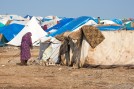
Syria’s Expectant Mothers Face Dual Perils of Bombs and Birth
Imagine what it would be like to live in a city under siege. Now imagine that you are just weeks, or even days, away from giving birth. Do you remain where you are, knowing that when the time comes you … Continue reading
Post
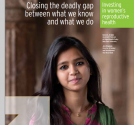
New World Bank Report: Better Reproductive Health = Better World
The World Bank just released Closing the Deadly Gap Between What We Know and What We Do: Investing In Women’s Reproductive Health (shown above) for Women Deliver. Its basic message is that investments in reproductive health are essential for development. In … Continue reading

Post
Perspectives on the London Family Planning Summit 2012: Seeing the Forest and the Trees
Originally posted on RH Reality Check Albert Einstein once said, “Never memorize something that you can look up.” As we head into the July 11th London Summit on Family Planning, we can focus more on concepts than numbers, because we … Continue reading
Data & Maps
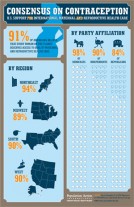
Consensus on Contraception
Despite the recent battles over contraception, polling data shows that Americans of every stripe support maternal and reproductive healthcare for all women. Continue reading

Press Release
Population Action International and Atlas Corps Welcome Nigerian Nonprofit Leader
PAI awarded Distinguished Partner Award March 12, 2012 Washington, DC – Atlas Corps is proud to announce the placement of its eighth Fellow, Mikang Longjan from Nigeria, at Population Action International (PAI). PAI is an organization that advocates for women … Continue reading

Post
Bird-Dogging Birth Control
On International Women’s Day, people around the world should ask: “How do we involve, educate and inspire girls globally?” We believe that access to contraception and comprehensive sex education are two non-negotiable pieces of this formula. We have progressed far … Continue reading
Policy Brief
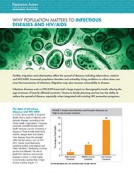
Why Population Matters to Infectious Diseases and HIV/AIDS
Links between Population Infectious Diseases and HIV/AIDS Fertility, migration and urbanization affect the spread of diseases including tuberculosis, malaria and HIV/AIDS. Increased population densities and unhealthy living conditions in urban slums can ease the transmission of infections. Migration may also … Continue reading

Newsletter
TIPSHEET November 2011
Welcome to the second edition of TIPSHEET, a quarterly newsletter of The Integration Partnership, a project of Population Action International. The TIPSHEET will provide regular insight into the work of The Integration Partnership (TIP), including showcasing some of our partners and … Continue reading