Donate Now
Topic » Population Trends and Demography
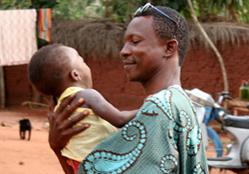 In 2011, the world’s population will surpass 7 billion. While the rate of population growth has slowed in most parts of the world, we still increase by nearly 80 million people every year—the equivalent of adding another U.S. to the world every four years. The number of people on the planet has doubled since 1960, and if current growth rates continue, the world’s population would hit 11 billion by 2050. Common estimates of a 9 billion plateau for world population rest of questionable assumptions about falling fertility rates and the availability of contraception. Currently, 222 million women around the world want to avoid pregnancy but need contraception.
Most countries in the developing world have high fertility rates and are getting younger; some developed countries have low fertility rates and are aging. Research has shown that demographics can have a significant impact on countries’ stability, governance, economic development and the well-being of its people. PAI believes that the future of population growth will be shaped by actions we take today, including providing access to family planning.
FEATURED PUBLICATIONS
10 Things You Should Know About Family Planning and the Demographic Dividend
The demographic dividend is the economic growth that may result from changes to a country’s age structure. The shifts in age structure are driven by a transition from people living short lives and having large families to living long lives … Continue reading

Data & Maps
Sex in the City: The Family Planning Needs of the Urban Poor
Today, 3.9 billion of us — more than half the world’s population — live in cities. By 2050, about two-thirds of us will live in urban areas. With so many people moving into cities, you might think they’re gaining access … Continue reading
Policy Brief
10 Things You Should Know About Family Planning and the Demographic Dividend
The demographic dividend is the economic growth that may result from changes to a country’s age structure. The shifts in age structure are driven by a transition from people living short lives and having large families to living long lives … Continue reading
Post
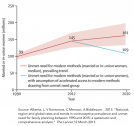
By the numbers: Any way you slice it, women need contraception
Last week, a new study out of The Lancet projected that in 2015, 233 million married or in-union women worldwide will have an unmet need for modern family planning. The bad news: that’s 12 million more women globally since 2010 … Continue reading
Policy Brief
Population Dynamics, Climate Change and Sustainable Development in Africa – Policy Brief
Population growth is occurring more rapidly in Africa than in other regions of the world, increasing vulnerability to climate change impacts and undermining sustainable development efforts on the continent. Indeed, most sub-Saharan development policies note that the region’s rapid population … Continue reading
Policy Brief
Population, Climate Change, and Sustainable Development in Malawi
Malawi is one of 15 population and climate change hotspots characterized by a high population growth rate, a high projected decline in agricultural production, and low resilience to climate change. In addition, Malawi faces severe water scarcity. The combined effects … Continue reading
Downloads
Report
Population Dynamics, Climate Change and Sustainable Development in Africa
A region’s population dynamics, including the size, distribution and composition of its population, influence its prospects for sustainable development. Virtually all development policies in Sub-Saharan Africa (SSA) cite the region’s rapid population growth, urbanization, and age structure as major challenges. … Continue reading
Downloads
Policy Brief
Why Population Matters to Poverty Reduction
Around 1.4 billion people—one-quarter of the population of the developing world—lived on less than $1.25 a day in 2005.1 The World Bank projects that the number of poor people will increase in the coming years due to slowing economic growth, … Continue reading
Policy Brief
Why Population Matters to Migration and Urbanization
People are moving from place to place more than ever before. Rates of international migration are increasing, and more than half of the world’s population now lives in cities. Many personal, economic, and environmental factors drive migration, and the pressures … Continue reading
Policy Brief
Why Population Matters to Forests
Deforestation threatens the well-being and livelihoods of millions of people who heavily depend on forest resources. It is particularly devastating for women and children in poor rural communities. Yet deforestation is occurring at alarmingly high rates, especially in areas of … Continue reading