Donate Now
Topic » Maternal Health
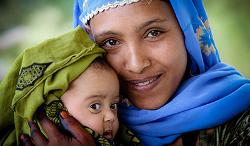 More than 350,000 women die every year in pregnancy or childbirth – the majority of them in developing countries. Pregnancy is the leading cause of death for women aged 15 to 19 worldwide, primarily due to complications of childbirth and unsafe abortion.
Universal access to family planning could prevent one-third of maternal deaths, while also allowing women to space or delay their pregnancies. Research shows mothers who wait three to five years before having another child have a lower risk of complications such as pre-eclampsia and hemorrhage and deliver healthier babies. PAI supports family planning as an effective strategy to improve maternal health, and advocates for increased access to life-saving reproductive and maternal health supplies.
FEATURED PUBLICATIONS
Why Population Matters to Maternal Health
Unintended pregnancies are an important cause of maternal deaths. Pregnancies that occur too early, too late or too frequently can lead to illness during pregnancy and complications at the time of birth. Lowering fertility rates by increasing the use of family planning helps to reduce pregnancy-related deaths and population growth. In many countries with high maternal mortality, fertility rates would be lower if women had the number of children they desire.
The Key to Achieving the MDGs
Fulfilling the global demand for family planning can significantly reduce the costs of achieving the U.N. targets, especially in maternal health and education. In Kenya alone, providing universal access to contraception could generate a $200 million net savings for the social sector in meeting the MDGs.

Data & Maps
These Three Cheap Drugs Can Save Moms’ Lives
In our first #MomsMatter infographic, we told you we have a problem. A big one. Every two minutes, 800 mothers die in pregnancy of childbirth, and almost all these deaths take place in the developing world. Three cheap drugs could … Continue reading
Data & Maps
Do You Believe #MomsMatter?
There’s good news and there’s bad news. The bad news is that a woman dies every two minutes from pregnancy or child birth. The good news is that the medication that can save these women’s lives is less than $1 … Continue reading
Post
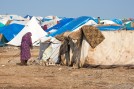
Syria’s Expectant Mothers Face Dual Perils of Bombs and Birth
Imagine what it would be like to live in a city under siege. Now imagine that you are just weeks, or even days, away from giving birth. Do you remain where you are, knowing that when the time comes you … Continue reading

Post
She’s Too Tired to Push. That’s Why We Must.
She forgot how to push after 22 children. The other woman had given birth 16 times and 4 of her children had died. I am sitting in the audience at Women Deliver 2013, and I wept as these stories were … Continue reading
Post
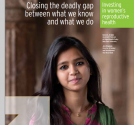
New World Bank Report: Better Reproductive Health = Better World
The World Bank just released Closing the Deadly Gap Between What We Know and What We Do: Investing In Women’s Reproductive Health (shown above) for Women Deliver. Its basic message is that investments in reproductive health are essential for development. In … Continue reading
Article
Keeping the Focus on Women and Girls
As part of PAI’s work on maternal and reproductive health supplies, PAI staff participated in a meeting of the Resource Mobilization and Awareness Working Group (RMAWG) of the Reproductive Health Supplies Coalition (RHSC) in Brussels. Roughly half of the participants … Continue reading

Post
Bringing Up Baby
I’m not one for platitudes. That’s why the onslaught of promotional emails for Mother’s Day is irritating me. Sure, send flowers as a token of your love and appreciation. Splurge on a spa package for that hard-working wife of yours … Continue reading
Data & Maps
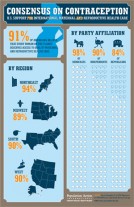
Consensus on Contraception
Despite the recent battles over contraception, polling data shows that Americans of every stripe support maternal and reproductive healthcare for all women. Continue reading
Policy Brief
Why Population Matters to Maternal Health
The State of Maternal Health Maternal mortality is a top cause of death among women of reproductive age in developing countries. Approximately 350,000 women die each year due to pregnancy-related causes, despite recent improvements and international commitments to reducing maternal … Continue reading

Newsletter
TIPSHEET November 2011
Welcome to the second edition of TIPSHEET, a quarterly newsletter of The Integration Partnership, a project of Population Action International. The TIPSHEET will provide regular insight into the work of The Integration Partnership (TIP), including showcasing some of our partners and … Continue reading